Morocco has quietly become one of the world's best classrooms for kitesurfing. If your goal is to learn kitesurfing Morocco with warm water, predictable trade winds, and affordable accommodation, Essaouira — Africa's wind capital — sits at the centre of that story. Thousands of riders each year choose the Atlantic coast to learn kitesurfing Morocco with IKO-aligned schools and sandy launch zones.
This learn kitesurfing Morocco guide is written for complete beginners. Whether you are planning your first kite holiday or you have already booked flights and need to know what to expect on day one, you will find practical answers about courses, wind, gear, safety, and how to get the most from your time on the water.
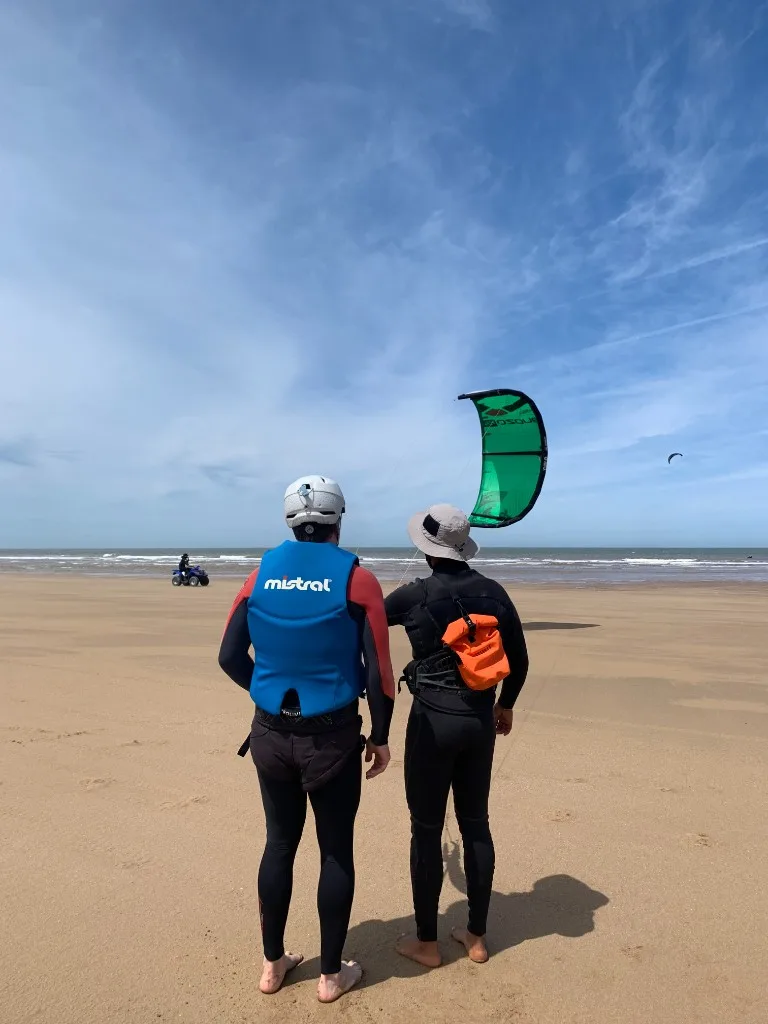
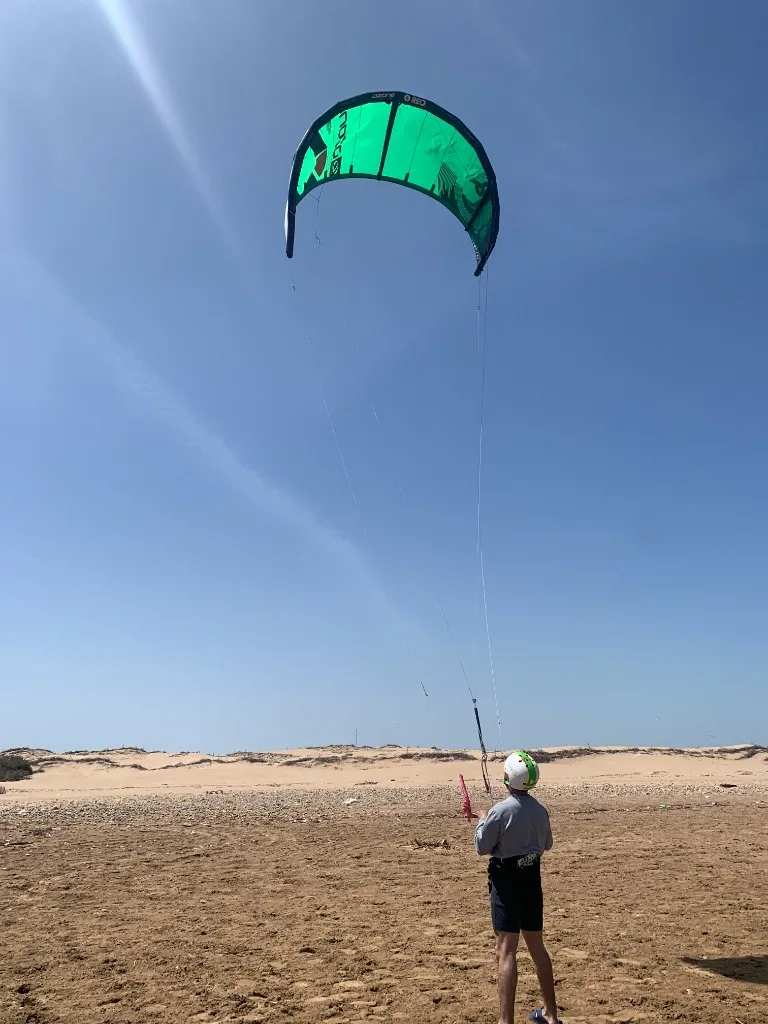
Why learn kitesurfing Morocco on the Atlantic coast?
Morocco offers advantages that are hard to replicate in Europe without spending significantly more. Flight times from major European hubs are short, visas are straightforward for most nationalities, and the cost of lessons, accommodation, and food is competitive. More importantly, the wind statistics work in your favour: along the Atlantic coast, especially around Essaouira, you can expect reliable breezes for much of the year.
For beginners, consistency matters more than perfection. You do not need epic waves or gale-force storms — you need steady, manageable wind on safe beaches with professional instruction. Morocco delivers that combination repeatedly. Schools follow internationally recognised curricula (see https://www.ikointl.com/ for IKO standards), equipment fleets are modern, and many instructors speak English, French, Spanish, and Arabic.
Beyond the sport itself, Morocco rewards you off the water. Fresh seafood, the UNESCO medina of Essaouira, day trips to the argan forests, and the relaxed pace of coastal life turn a kite course into a proper holiday rather than a gruelling boot camp.
Why Essaouira is the kite beginner's sweet spot
Essaouira is not the only kitespot in Morocco — Dakhla and Moulay Bouzerktoun attract advanced riders — but it is arguably the best place to learn. The bay is spacious, the bottom is sandy, and the wind accelerates smoothly across the water rather than gusting unpredictably off cliffs.
The town has invested in its watersports infrastructure over two decades. You will find multiple IKO-affiliated centres, repair shops, rental lockers, and a community of riders at every level. When you finish a morning lesson, you are minutes from a coffee in the medina, not isolated at the end of a desert track.
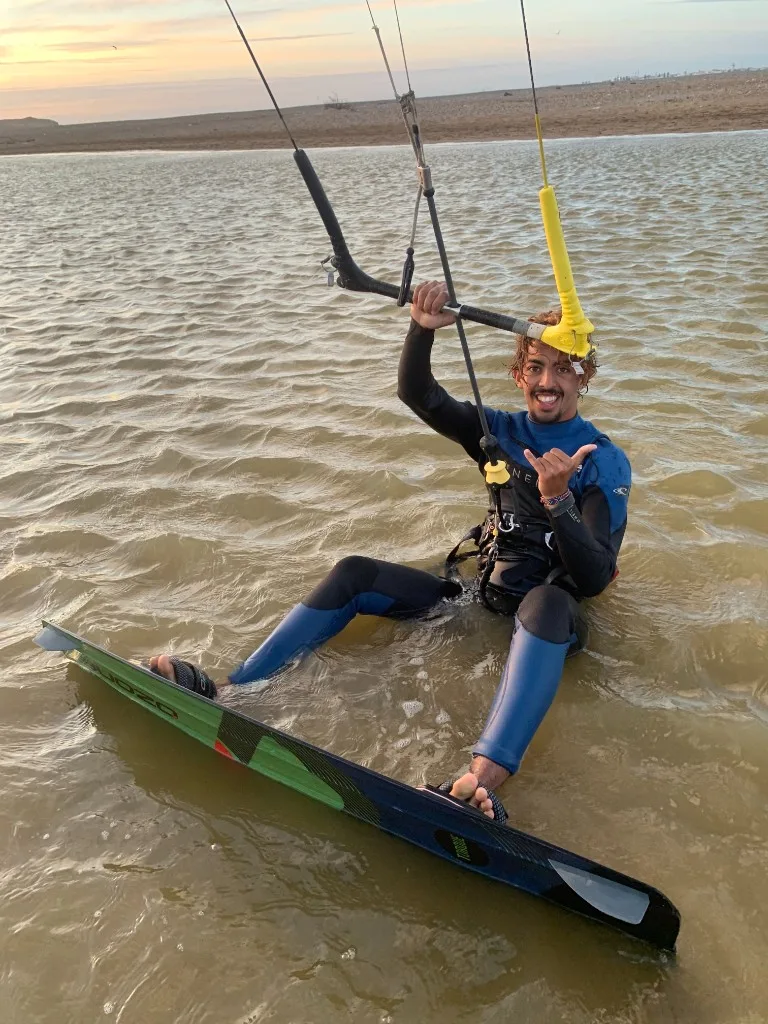
Wind you can plan around
Locals often describe Essaouira's wind as the Alizée — the north-easterly trade wind that strengthens through the afternoon. For lessons, this rhythm is ideal: mornings can be used for theory, beach flying, and body-dragging in gentler conditions; after lunch, the breeze builds and you transition to water starts and riding.
Typical seasonal patterns:
- April–June: Building season; warm air, increasing wind reliability, fewer crowds than peak summer.
- July–September: Peak wind and peak tourism; book accommodation and courses early.
- October: Still excellent wind with milder temperatures — a favourite among instructors for progression courses.
- November–March: Windy but cooler; wetsuits essential; great value and empty beaches for committed learners.
Average strengths during the main season sit between 18 and 28 knots in the afternoon — exactly the range where beginners learn depower, edge control, and eventually upwind riding with the right kite size.
Understanding IKO courses before you book
The International Kiteboarding Organization (IKO) provides a global standard for instruction and certification. When a school says it is IKO-affiliated, you should expect structured lesson plans, qualified instructors, insurance coverage, and a progression path that transfers to other IKO centres worldwide.
For a kitesurf beginner in Morocco, the usual pathway looks like this:
Discovery (Level 1)
You learn what kitesurfing is, how wind windows work, and how to set up equipment safely. Most of this happens on land. You will fly a trainer kite or a small leading-edge inflatable under supervision, feeling how steering inputs affect power.
Intermediate (Level 2)
This is where the magic starts. Body dragging downwind, relaunching the kite, board starts, and your first short rides. In Essaouira's steady wind, many students touch their first rides within three to five days of instruction, depending on fitness, prior board sports experience, and conditions.
Independent (Level 3)
You work on controlling speed, riding upwind, transitions, and self-rescue. The goal is to ride independently, understand right-of-way rules, and know when conditions are beyond your ability.
Always ask a school which IKO level each package covers, whether certification fees are included, and what happens if wind is too light or too strong on a booked day. Reputable centres reschedule or adjust activities rather than rushing unsafe water sessions.
What your first week actually looks like
Knowing the day-by-day rhythm removes anxiety. While every school sequences slightly differently, a typical beginner week in Essaouira follows a logical arc.
Day 1 — Safety, theory, and kite control
You meet your instructor, sign waivers, and assess swimming comfort. Gear is introduced piece by piece: bar, lines, harness, kite, board. You spend most of the session on the beach learning to launch and land with assistance, steer without over-steering, and release to safety systems. Homework is rest — your shoulders will remind you why kite fitness matters.
Day 2 — Body dragging and relaunch
In shallow water you practice controlled body drags downwind and upwind, single-handed kite control, and relaunching from the water. This is less glamorous than riding but essential; most accidents come from poor kite handling, not from failing to carve on a board.
Day 3 — Board starts
With wind building, you add the board: water starts, riding downwind in both directions, and controlled stops. Falls are frequent and normal. Your instructor will coach kite position — usually the mistake is pulling the bar too hard, not failing to stand up.
Days 4–5 — Consistency and distance
Repeat starts, extend ride length, introduce edging lightly. Some students begin thinking about upwind body position by the end of day five; others need more time — both are fine. Progress is not linear.
Days 6–7 — Refinement or weather buffer
Strong schools keep these days flexible: extra water time if you are close to independent riding, or theory and light-wind drills if the Atlantic delivers an unusually calm afternoon. Use buffer days rather than treating them as wasted.
Choosing the right course format
- Private lessons: Fastest progression, customised feedback, best if you are nervous in groups or have a fixed short holiday.
- Semi-private (2 students): Excellent balance of attention and social learning; partners often motivate each other through plateaus.
- Group lessons (3–4 students): Most economical; slightly slower per person but still effective with skilled instructors.
- Complete camps (7–10 nights): Accommodation, transfers, and lessons bundled — ideal for solo travellers who want logistics handled.
If you already snowboard or wakeboard, mention it at booking. Edge awareness and balance transfer, though kite control remains the new skill.
Gear: what schools provide and what to pack
Reputable schools supply kites, bars, harnesses, wetsuits or shorties depending on season, helmets, and impact vests. You typically bring swimwear, sunscreen, sunglasses, and a rash vest if you prefer an extra layer under the harness.
For Morocco specifically, pack:
- Reef-safe sunscreen — high SPF, reapplied often; reflection off water intensifies burns.
- Sunglasses with a strap — bright Atlantic glare is relentless.
- Warm layer for evenings — Essaouira's nickname, "City of Trade Winds," applies after sunset too.
- Flexible travel insurance that covers watersports.
- Booties (optional) — sandy beaches rarely require them, but some riders prefer them in cooler months.
Advanced students may travel with their own kites to save rental fees; beginners should not buy gear before completing a course. You will understand which kite sizes and board shapes suit your weight and local wind only after instruction.
Safety essentials every beginner must internalise
Kitesurfing is safer than its reputation when taught properly, but it is still a power sport attached to the weather.
- Never ride outside your certified level without supervision.
- Learn and practice self-rescue before chasing deep water.
- Respect the wind window: downwind of obstacles and other riders is danger territory.
- Use a school that maintains equipment logs and retires worn lines promptly.
- If wind feels chaotic or you are overtired, stop. Fatigue causes more mistakes than lack of talent.
Essaouira's bay has zones for learners, intermediates, and advanced riders. Stay where your instructor places you, even if empty water tempts you elsewhere.
Combining kitesurf with surf and culture
One of Morocco's underrated advantages is variety. On a light-wind morning, take a surf lesson. On a windy afternoon, kite. On a rest day, wander the medina ramparts, visit a cooperative producing argan oil, or drive south to Sidi Kaouki for a different beach vibe.
Food is part of the experience: grilled sardines at the port, tagines in riad courtyards, and mint tea offered with hospitality that makes solo travellers feel welcome. Learning kitesurfing here is never only about the kite — it is about placing a new sport inside a rich cultural context.
Where to stay as a kite student
Most riders stay in the medina, Riad Laarousse, or along the beach road within walking or short taxi distance of schools. Booking a riad with gear storage and early breakfast helps lesson mornings flow smoothly. July and August fill quickly; April, May, June, September, and October offer excellent wind with easier availability.
Ask your school about storage for wetsuits and harnesses if you are changing accommodation mid-trip. Many centres offer lockers for the duration of a course package.
How to book smart in 2024
Prices vary by season, group size, and whether equipment rental is included. When comparing quotes:
1. Confirm total hours on the water, not just "days." 2. Verify IKO certification and instructor-to-student ratio. 3. Read recent reviews mentioning beginner progression, not only advanced freestyle. 4. Clarify cancellation and wind-day policies. 5. Book through the school's official channel to secure dates and insurance.
Frequently asked questions
Do I need to be strong to kitesurf?
You need moderate fitness and comfortable swimming, not bodybuilder strength. Technique and kite control matter more than muscle mass.
How old do I need to be?
Many schools teach children from around 12 with parental consent and appropriate weight for kite sizes. There is no strict upper age limit if you are healthy and realistic about progression pace.
Is French or Arabic required?
No. Essaouira's watersports community operates in multiple languages; English is widely spoken in schools.
What if there is no wind?
Established centres reschedule water sessions, offer theory, or shift to alternative activities. Book a package with flexibility rather than single isolated days if your dates are fixed.
Can I learn in one weekend?
You can start learning, but independent riding usually requires more time. Treat a weekend as an introduction, not a completion.
Your next step
Morocco — and Essaouira in particular — rewards beginners who arrive curious, patient, and willing to trust the process. The wind will feel alien at first; then one afternoon you will ride a short distance, look back at the beach, and understand why riders travel thousands of kilometres to repeat that sensation.
Start with an IKO-structured course, respect the ocean, and give yourself at least five water days. The Atlantic trade winds have been blowing long before any of us picked up a kite; they will still be here when you return for your second season.
Keep reading
Related guides from our read our latest articles