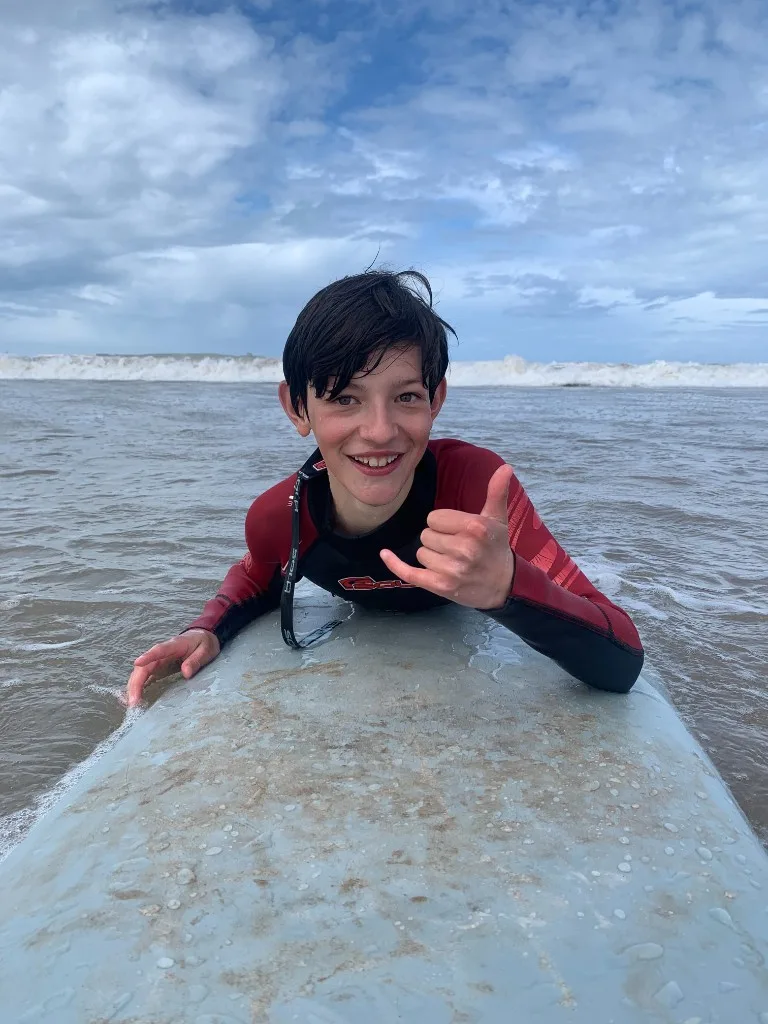
Standing on a board in the Atlantic sounds romantic—until your brain realises the ocean moves in three dimensions at once. The good news: Essaouira is one of Morocco’s most beginner-friendly urban surf bases, with sandy venues, experienced coaches, and lesson culture that expects nervous first-timers.
Mindset: what coaches wish you knew pre-arrival
You are not “bad at surfing” if you don’t stand on wave one. Motor learning underwater is slower than gymnastics on mats because balance shifts under your feet unpredictably.
Laugh at the rinse cycle. Falling is data: it tells your coach whether your eyes looked down, whether you popped too late, or whether you tried to muscle through a collapsing whitewater pocket.
Trust the sandwich structure. Quality schools layer: (1) injury prevention on land, (2) repeatable reps in forgiving water, (3) one new concept per session—not five.
International instructor frameworks (for example programmes associated with https://isa.surf/) emphasise sequential skill building; your local coach translates that into Atlantic sandbank reality.
The typical lesson flow (land → water → debrief)
Exact timing varies, but most beginner blocks follow a rhythm you can rely on.
Check-in and conditions chat (5–10 minutes)
You’ll hear wind updates, which part of the beach is running today, and where bathroom/kit storage is. Ask questions—especially about rip currents and signals if you get separated.
Warm-up and pop-up drills (15–25 minutes)
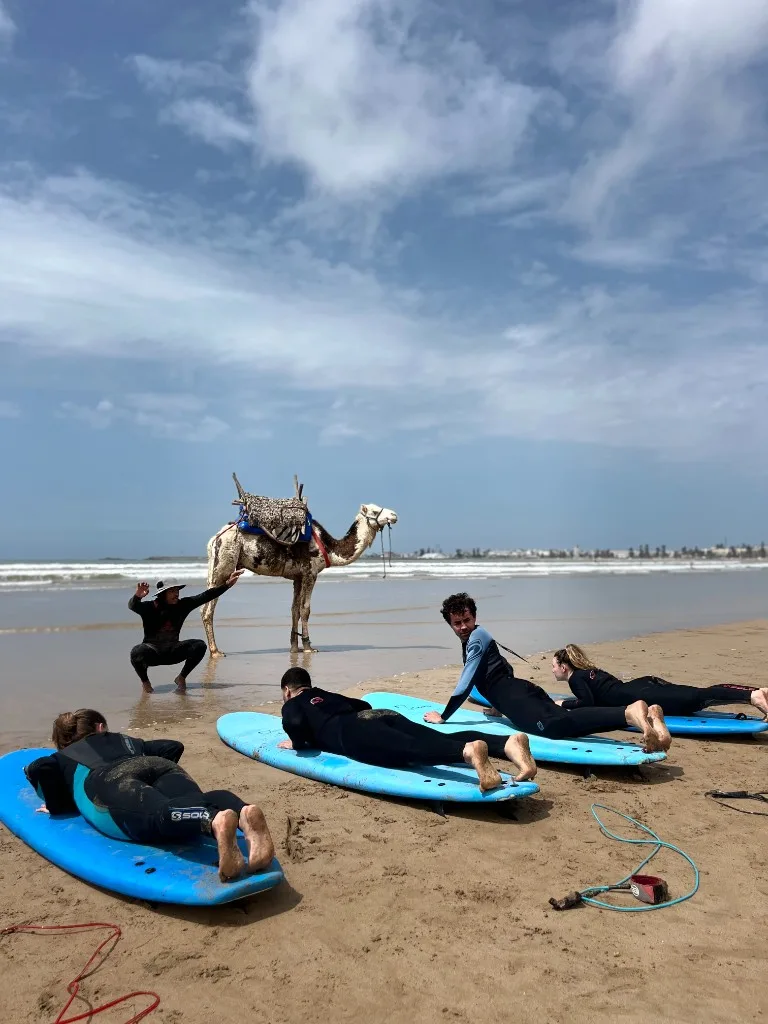
Expect dynamic mobility (shoulders, hips, ankles) plus pop-up repetitions on sand or grass. Coaches watch for wrist pain, lower-back rounding, and domination from the front foot—early fixes save frustration.
Water session (60–90 minutes in many 2h lesson formats)
You’ll spend time:
- practising push-and-jump or step-through pop-ups depending on your mobility
- learning to turn the board in whitewater
- timing when to paddle so you’re not exhausted before the fun part
Quick debrief (5–10 minutes)
One cue for next session—e.g. “eyes to the beach on takeoff”—beats a laundry list you’ll forget by dinner.
Safety, swim comfort, and why we’re strict about both
Essaouira’s surf culture is welcoming, but the ocean is not a swimming pool. Expect your coach to verify:
- can you tread water briefly and roll under waves without panic?
- do you understand how to fall (flop flat, protect head, resurface clear of the board)?
- can you listen to whistle or voice commands in wind?
If you’re anxious, say so. Good coaches adjust depth, hold the board longer on first assists, and choose sandier reforms. For more context on how schools should operate ethically, reading about global surf education standards via https://isa.surf/ can help you ask sharper questions locally.
Realistic skills timeline (1, 3, and 5 sessions)
After 1 beginner lesson
Possible: first assisted ride in whitewater, understanding stance, feeling how your hips steer the rail.
Normal: lots of slips, accidental nose-dives, tired shoulders. That is the lesson working.
After ~3 lessons
Many adults can repeat short rides without constant hand-holding, begin steering across slower foam, and read basic “this wave vs not this wave” cues.
After ~5 lessons
Strong adults often approach gentle green waves on forgiving days—with coach positioning still essential. Variables: fitness, ocean comfort, lesson spacing, sleep, and daily conditions.
Gear you’ll use—and what to bring yourself
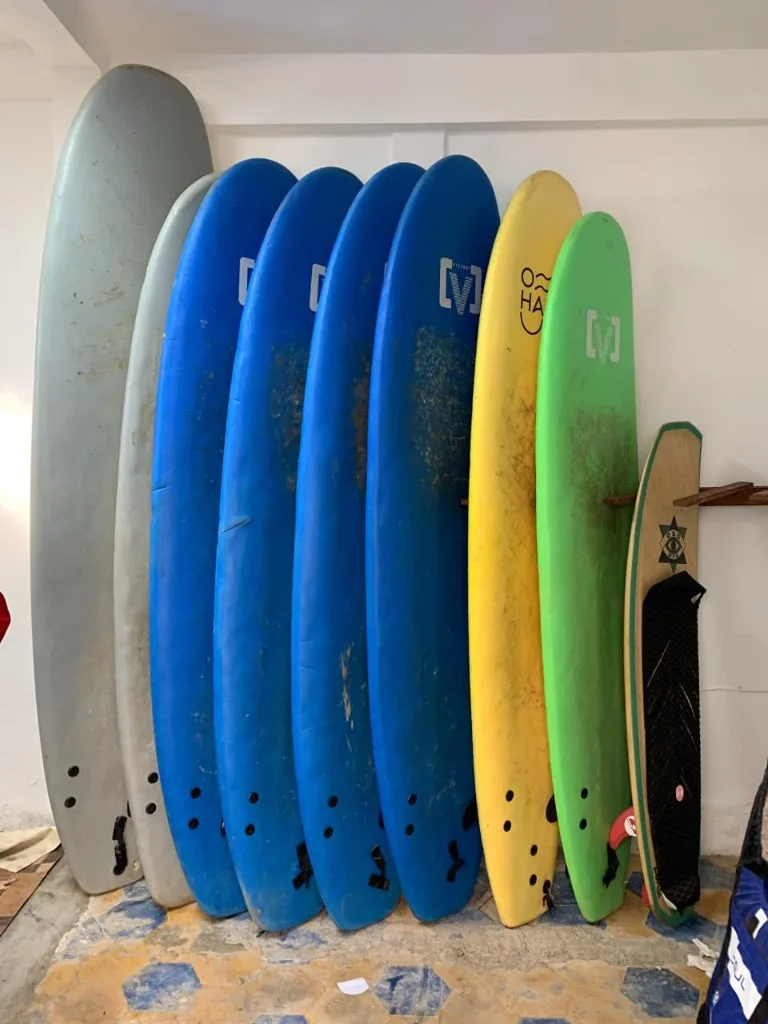
Schools normally provide soft-top or foam beginner boards, wetsuits, and leashes. You bring:
- swimwear that stays put during wipeouts
- towel, sunscreen, hydration, snack if you crash post-session
- optional: light thermal top if you chill fast after water exit
- reef-safe sunscreen mindset even on sand-dominant beaches (habit for future travel)
Footwear on hot sand is nice; flip-flops live in kite bags globally for a reason.
Group energy vs private calm
Groups excel when you feed off classmates, enjoy breaks between rides, and want approachable pricing.
Privates shine if you crave instant feedback loops, have a specific fear to unpack, or book a family unit with mismatched ages.
private vs group surf lessons in Essaouira
After the lesson: food, fatigue, and day-two soreness
Expect triceps, lats, and hip flexors to talk the next morning—especially if you’re not a regular swimmer. Walk the medina, stretch calves, hydrate with electrolytes, and sleep. Stacking back-to-back marathon sessions without recovery often lowers wave count on day three.
FAQ
Do I need to be fit to start?
Will I stand up on the first lesson?
Are kids and adults in the same group?
What if I’m scared of deep water?
Can beginners surf in winter?
Keep reading
Related guides from our surf tips and Morocco travel guides