There's a moment that happens almost every morning at Sidi Kaouki. The sun has just cleared the horizon, painting the Atlantic in shades of gold and rose. A light offshore breeze ruffles the surface of the water. And a set of clean, peeling waves rolls through, completely empty, with nothing but a few camels wandering the beach as witnesses.
That moment is why we drive twenty-five minutes south from Essaouira every single day.
Sidi Kaouki isn't famous like Taghazout. It doesn't have the Instagram hype of Anchor Point or the backpacker density of Imsouane. What it has is four kilometres of uninterrupted sandy beach, multiple peaks that work on different tides and swells, and a village that still feels like Morocco rather than a surf resort. If you're looking for authentic surfing near Essaouira, this is where the magic happens.
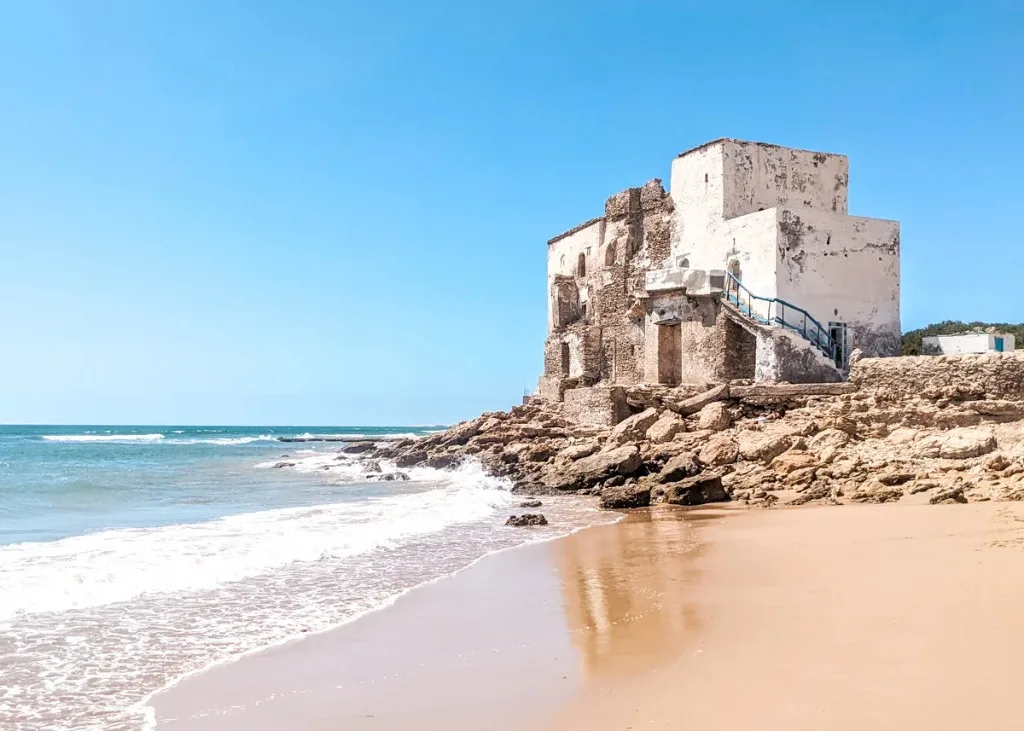
Where is Sidi Kaouki and how to get there
Sidi Kaouki sits about 25 kilometres south of Essaouira, roughly a twenty-five-minute drive along the coastal road P2210. The road is paved and well-maintained, winding through argan forests and past small Berber villages. If you're renting a car, it's an easy drive with clear signage.
Most surf schools in Essaouira, including ours, include transport to Sidi Kaouki in their lesson and camp packages. We leave Essaouira around 9:30 AM to catch the morning glass before the wind builds. If you're going independently, petit taxis from Essaouira charge around 150–200 MAD for the one-way trip — arrange a return pickup in advance; there are no taxi stands waiting in Sidi Kaouki.
The village itself is tiny: a handful of cafés, a few guesthouses, a surf shop, and the endless beach. No ATMs, no supermarkets, no nightlife. People come here for one reason: the waves.
Understanding the Sidi Kaouki surf area
What makes Sidi Kaouki special is that it's not one surf spot — it's a whole surf zone. The beach curves gently over four kilometres, creating different wave dynamics depending on where you paddle out. After years of daily sessions here, we've identified the main zones:
The northern peaks (near the rivermouth)
On bigger swells, this area produces the most powerful waves in Sidi Kaouki. There's a right-hand reef/point break at the far north end that works on mid-to-high tide with solid northwest swell. It's not for beginners — the wave jacks up quickly and dumps on shallow sections. For intermediate and advanced surfers, it's one of the best waves within an hour of Essaouira.
The central beach breaks
This is where we take our beginner and intermediate students. Multiple sand-bottom peaks spread across the beach — even when it's busy, you can find an empty peak by walking a few hundred metres. On small to medium swells, you get long, rolling lefts and rights perfect for learning turns and building confidence.
The southern peaks (near the camels)
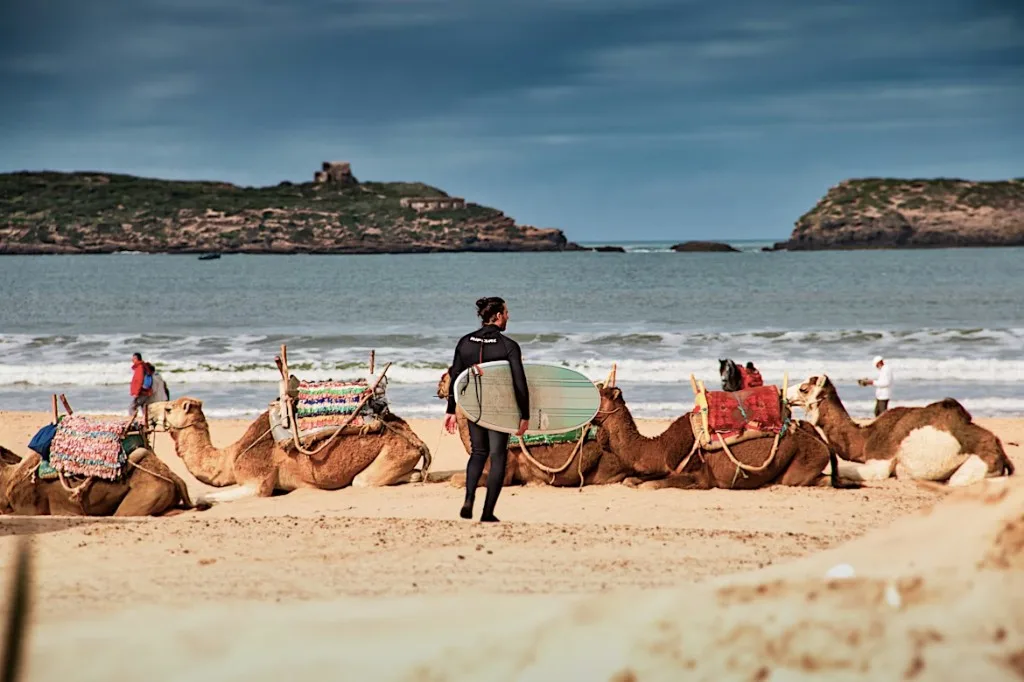
The far south end tends to be softer and more crumbly — ideal for longboarding and beginner practice. It's also where local camel guides bring their animals for tourist rides, creating that iconic Morocco surf scene: waves, camels, and endless sand.
When does Sidi Kaouki work best?
Sidi Kaouki is remarkably consistent, but it changes character dramatically depending on conditions.
Swell direction: Northwest swells are the money direction — they wrap cleanly into the bay and light up all the peaks. West swells work too but tend to close out more on the central beach. South swells are rare here but can produce fun, unconventional waves at the northern reef.
Wind: The same trade winds that make Essaouira famous often improve surf here. Side-shore wind from the north grooms the waves and keeps faces clean. Cross-shore from the south can make it choppy, but the beach is long enough that you can usually find a sheltered corner. Morning sessions before 11 AM are almost always glassy, regardless of forecast.
Tide: The tide range is significant — around 3 metres. Low tide exposes more sandbars and can make waves faster and hollower. Mid-tide is generally the sweet spot. The northern reef needs at least mid-tide to cover the rocks properly.
Why we take students to Sidi Kaouki
As a surf school based in Essaouira, we choose our spot daily. Some mornings Essaouira Bay is too onshore or too small — that's when we load the boards and head south.
The main beach break offers something for every level: whitewater for complete beginners, green waves for intermediates, hollow sections up north for advanced riders. Water quality is excellent — no industrial runoff, just clean Atlantic water. The beach is wide enough that even in August you don't feel crowded.
And there's something intangible — the atmosphere. Surfing at Sidi Kaouki feels like discovering a secret. The lack of high-rise hotels, the camels on the beach, fishermen pulling boats ashore by hand — it creates a sense of surfing in Morocco the way it was twenty years ago.
Safety considerations at Sidi Kaouki
Any honest surf guide must cover risks, not just perfection.
Currents: The central beach generally has manageable longshore currents, but the northern rivermouth can create stronger rips, especially on outgoing tide. Beginners should stay in the central zone and surf with supervision.
Wind: A glassy morning can turn into a howling afternoon. If you're renting alone, check the forecast and plan to finish by early afternoon. We've rescued tourists blown downwind who didn't respect the wind buildup.
Isolation: No lifeguards, no rescue services, no medical facilities on the beach. A serious injury means a twenty-five-minute drive back to Essaouira. Surf within your ability and tell someone where you are.
The reef: The northern point has rocks, urchins, and shallow sections. Booties are recommended up there. The central beach is pure sand; the northern end is not.
Where to stay, eat, and chill
If you fall in love with Sidi Kaouki (many people do), you have a few options.
Surf camps on the beach offer lessons, equipment, meals, and simple rooms — ideal for full immersion.
Guesthouses run by local families are basic but charming, often with home-cooked meals and rooftop sunsets.
Day trips from Essaouira give you medina restaurants and nightlife at night, pristine waves by day — how most of our guests do it.
Beach cafés serve fresh fish tagine, grilled sardines, omelettes, and mint tea. No fancy restaurants needed — after a four-hour session, everything tastes incredible.
Sidi Kaouki vs. Essaouira Bay: which should you choose?
| Choose Essaouira Bay if… | Choose Sidi Kaouki if… | |---|---| | You're a complete beginner wanting the easiest intro | You want better wave quality and more space | | You want toilets, cafés, easy taxi access | You're intermediate/advanced seeking real waves | | You're with young kids who may leave early | You want desert-meets-ocean atmosphere | | You love the medina walls in the background | You don't mind a short drive for better conditions |
A local secret: the best sessions nobody talks about
The absolute best surf sessions at Sidi Kaouki happen in winter, mid-week, early morning, after a big storm has passed. Cold water keeps most tourists away. The wind switches offshore overnight. Sandbars shift into perfect formation. You might share four kilometres of beach with three other surfers.
Dark wetsuits, steam rising from the water, empty peaks under a grey Atlantic sky — that's the real Sidi Kaouki. It's not in the brochures. But it's why locals have treasured this coast for years.
Book a Sidi Kaouki surf trip from Essaouira
Sidi Kaouki surf isn't about luxury or convenience. It's about waves, space, and surfing authenticity that's getting harder to find. Whether you're catching your first whitewater roll or pulling into a hollow winter peak, this beach delivers something real.
FAQ
How far is Sidi Kaouki from Essaouira?
Is Sidi Kaouki good for beginner surfers?
How much is a Sidi Kaouki day trip from Essaouira?
When is the best time to surf Sidi Kaouki?
Can I get a taxi back from Sidi Kaouki?
Keep reading
Related guides from our Essaouira surf blog