The first time a six-year-old stands up on a wave and realizes they're riding it alone, something changes in their eyes. It's not just excitement — it's the dawning awareness that they can do something their parents can't always protect them from. That mix of independence and ocean connection is why we teach kids to surf in Essaouira, and why parents keep bringing them back.
But I get it. The ocean is big, waves are powerful, and your instinct is to wrap your child in bubble wrap. This guide covers everything we've learned from eight years of kids surf lessons in Essaouira — the safety protocols, the age questions, the emotional moments, and the practical stuff nobody tells you.
What is the right age to start surfing?
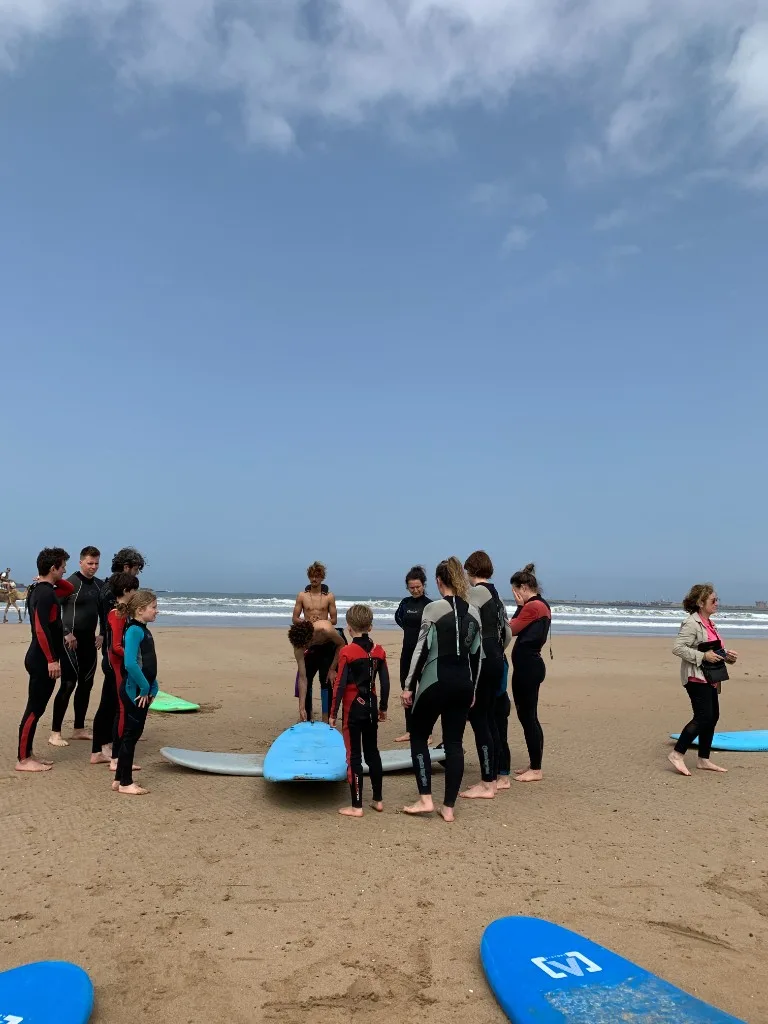
We've taught kids as young as five, but the sweet spot is seven to twelve. At five and six, lessons are essentially ocean play with boards. We focus on beach safety, bodyboarding, and standing up in whitewater if they're ready. The goal isn't technical surfing — it's comfort and joy in the ocean.
By seven, most kids have the coordination for a proper pop-up and the strength to paddle a soft-top board. They also have enough emotional regulation to handle falling without meltdowns. Twelve to fifteen is the golden age — strong, fearless, and able to process technical coaching.
That said, we've had fearless six-year-olds who progressed faster than cautious ten-year-olds. Water confidence matters more than age. If your child loves swimming, splashing in waves, and isn't fazed by seaweed touching their leg, they're ready. If they panic when water splashes their face, start with beach play and build up.
how long it takes to learn surfing
What happens in a kids surf lesson?
Our kids surf lessons in Essaouira follow a structure we've refined over hundreds of sessions:
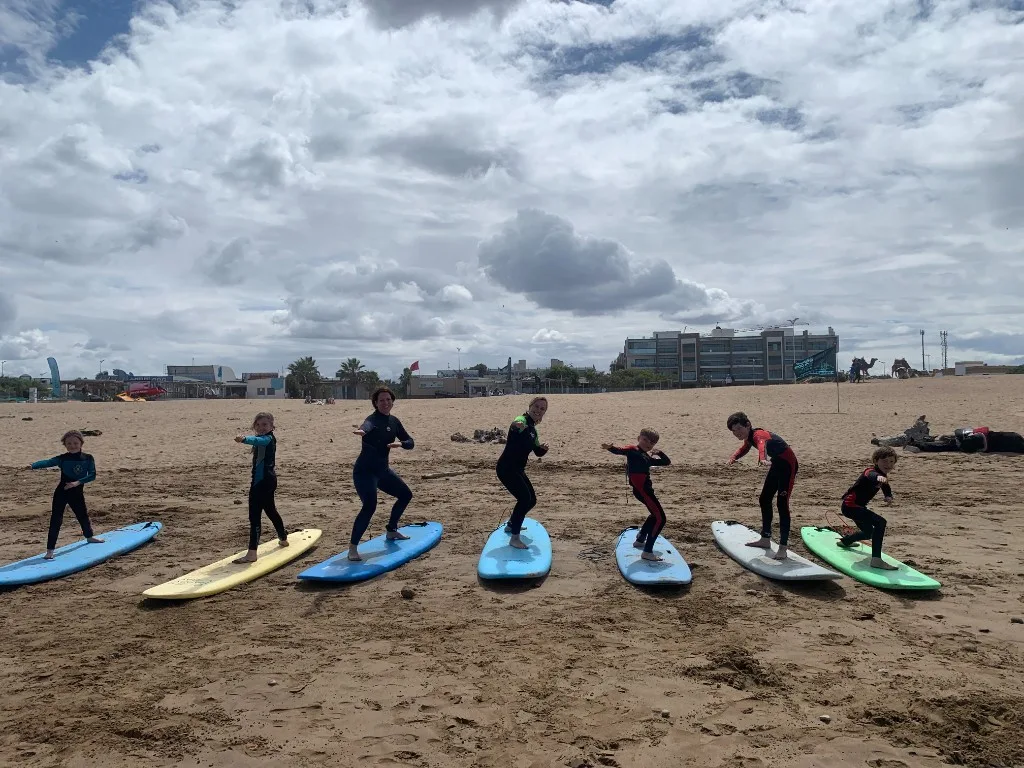
Beach warm-up (15 minutes): Games on the sand — balance challenges, pop-up races, surf stance practice. We make it silly: flamingos on one leg, statues that can't wobble. Physical readiness disguised as play.
Ocean confidence (15 minutes): Before boards touch the water, we play in the shorebreak. Jumping waves, ducking under whitewater, feeling the ocean's power without the board as a crutch. Kids who skip this phase often panic later when a wave hits unexpectedly.
Board introduction (30 minutes): The first board session is in knee-deep water. Kids practice lying on the board, paddling in circles, and getting used to the feel. Then the magic moment — an instructor pushes them into a tiny whitewater wave, and they stand up.
Progressive challenges: As confidence builds, we add paddling independently, catching waves without a push, turning left or right, and eventually paddling to deeper water. Each step is earned, never forced.
A standard kids lesson runs 90 minutes — shorter than adult sessions because attention spans and stamina have limits. We end every lesson with a beach game and a high-five circle. Kids remember the feeling of accomplishment long after they forget the technique.
Safety protocols we never compromise
As a parent myself, I wouldn't put my daughter in any surf program that didn't have these protocols. Here's what you should demand from any Essaouira surf school teaching kids:
Instructor ratio: Maximum three children per instructor. One-to-one for kids under seven or nervous swimmers. Anything more is crowd control, not teaching.
Soft-top boards only: Kids use foam boards exclusively — buoyant, soft on impact, stable. No hard boards, no matter how "advanced" the child seems.
Leash protocol: Every child wears a leash from the moment they touch the board. We teach them to fall away from the board so the leash doesn't tangle. Instructors carry leash cutters as standard equipment.
Boundary system: Clear physical boundaries in the water. Kids cannot paddle past a set point without an instructor — preventing excited drift beyond their ability.
Buddy checks: Every 10 minutes, instructors do a head count. In rougher conditions, every 5 minutes. We never assume we know where everyone is.
Sun protection: Long-sleeve rash guards are mandatory. Zinc on faces. Water breaks every 20 minutes. Dehydration and sunburn end lessons faster than bad waves.
beginner surf lessons — what to expect
What parents should bring (beyond the obvious)
Yes, bring sunscreen and water. But also bring:
- A beach tent or umbrella — Moroccan sun is relentless; shade between sessions matters
- Quick-energy snacks — dates, bananas, granola bars; surfing burns serious calories for small bodies
- Dry clothes to change into — wet wetsuits feel fine in the water; cold, clammy wetsuits on the beach lead to shivering
- Your patience — kids have bad days. We never force a child into the water. The ocean will still be there tomorrow
The emotional side nobody talks about
Kids surf lessons aren't just physical education. They're emotional journeys. I've seen children conquer fear they didn't know they had. I've watched shy kids become leaders in group lessons. I've seen siblings who fight constantly at home become teammates, cheering each other on.
But I've also seen kids struggle — the child who keeps falling while everyone else stands up, the one who gets water up their nose and refuses to try again, the teenager embarrassed because they think they should be better.
Our job isn't just to teach surfing. It's to read these moments and respond. Sometimes that means pushing harder. Sometimes it means a one-on-one chat. Sometimes it means suggesting they sit out and watch.
Parents can help by managing expectations. Don't ask "Did you stand up?" Ask "Did you have fun?" Don't compare siblings. Celebrate effort over outcome. The surfing will come; the confidence is what lasts.
Beyond the lesson: making it a family memory
After the session, walk the medina together. Share fish tagine at the port. Let your child lead you to their favourite ice cream spot. The surf lesson becomes the anchor for a family adventure, not just an activity.
Final thoughts: the gift of ocean confidence
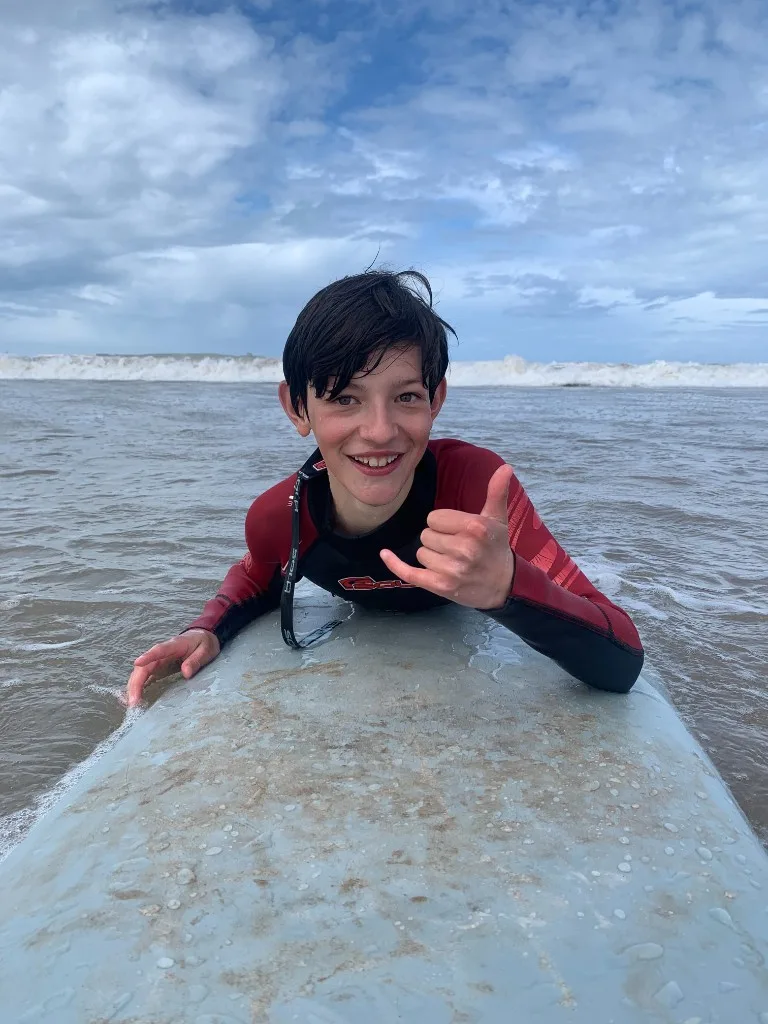
In a world of screens and scheduled activities, giving your child unstructured time in the ocean is a radical act. They'll fall. They'll get salt in their eyes. They'll come home exhausted and starving. And they'll wake up the next morning asking when they can surf again.
Kids surf lessons in Essaouira aren't about creating the next Kelly Slater. They're about giving children a relationship with the natural world that they'll carry forever. The waves don't care about their grades, their social media followers, or their soccer trophies. The waves just ask them to show up, try hard, and respect the ocean.
That's a lesson worth learning.
FAQ
What age can children start surf lessons in Essaouira?
How long is a kids surf lesson?
What instructor ratio should I expect for kids?
Are hard surfboards used for children?
What should parents bring to a kids surf lesson?
Keep reading
Related guides from our click here