"How long until I can actually surf?" It's the first question every beginner asks, usually while awkwardly carrying a foam board toward the water. The honest answer? It depends on what you mean by "surf." Standing up on a whitewater wave? That might happen in your first two-hour lesson in Essaouira. Paddling out alone, reading waves, and riding clean green faces? That takes longer — but probably less time than you think.
After teaching thousands of students at our Essaouira surf school, I can give you realistic expectations based on actual data, not marketing hype. Here's what the progression really looks like.
Day 1 to 3: the foundation phase
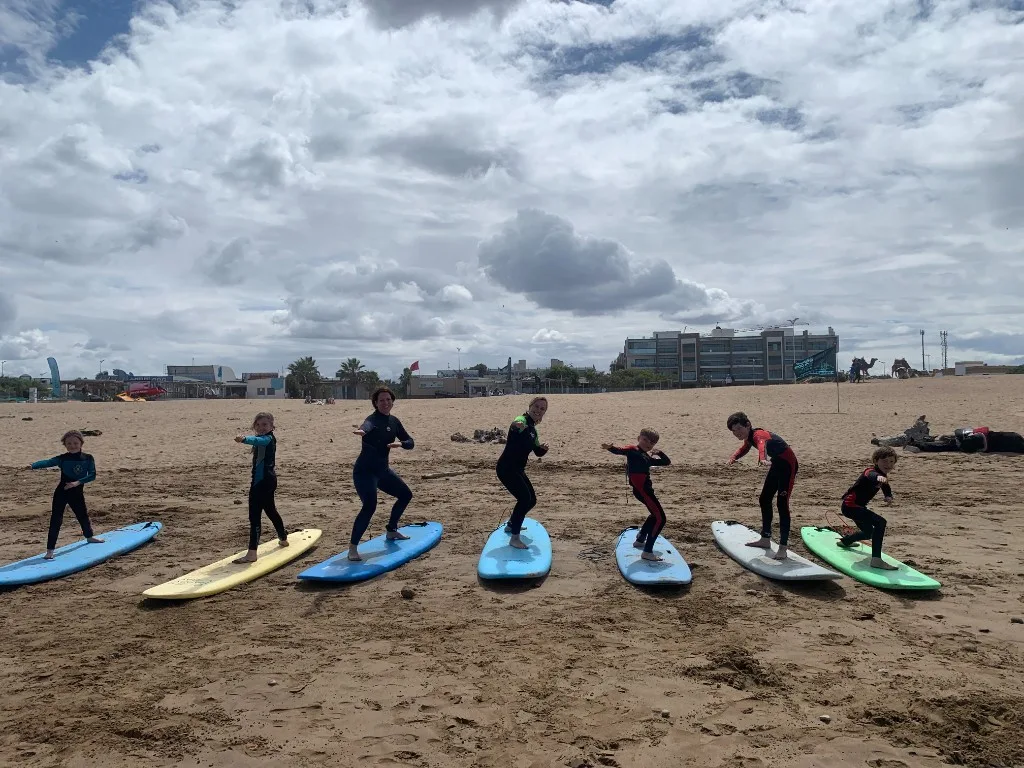
Most beginners who take surf lessons in Essaouira stand up within their first session. It's not graceful. It doesn't last long. But that first feeling of glide hooks you. By day three, if you're taking daily lessons, you're consistently catching whitewater waves and standing for five to ten seconds.
During this phase, you're building ocean confidence more than surfing skill. You're learning how to fall safely, how to turn your board around, and how to read the rhythm of the Atlantic. Essaouira's sandy beach break is perfect for this because the consequences of failure are minimal — you fall, you laugh, you try again.
Realistic goal after 3 days: Consistent whitewater rides, basic board control, comfortable paddling in small surf.
Day 4 to 7: entering the green zone
This is where surfing actually begins. Around day four or five, most students start paddling for unbroken green waves. The difference is dramatic. Whitewater pushes you; green waves require you to match their speed, angle your takeoff, and commit to the drop.
In Essaouira, we typically move students to slightly more advanced peaks during this phase — spots where the waves peel gently rather than closing out all at once. The trade winds actually help here by keeping the wave faces clean and organized.
This is also when surf etiquette becomes essential. You're no longer alone in the whitewater. You're sharing peaks with other learners and locals. We teach priority rules, how to avoid dropping in, and how to control your board so it doesn't become a projectile.
Realistic goal after 7 days: Catching small green waves independently, basic left/right turns, understanding lineup etiquette.
Week 2 to 3: building consistency
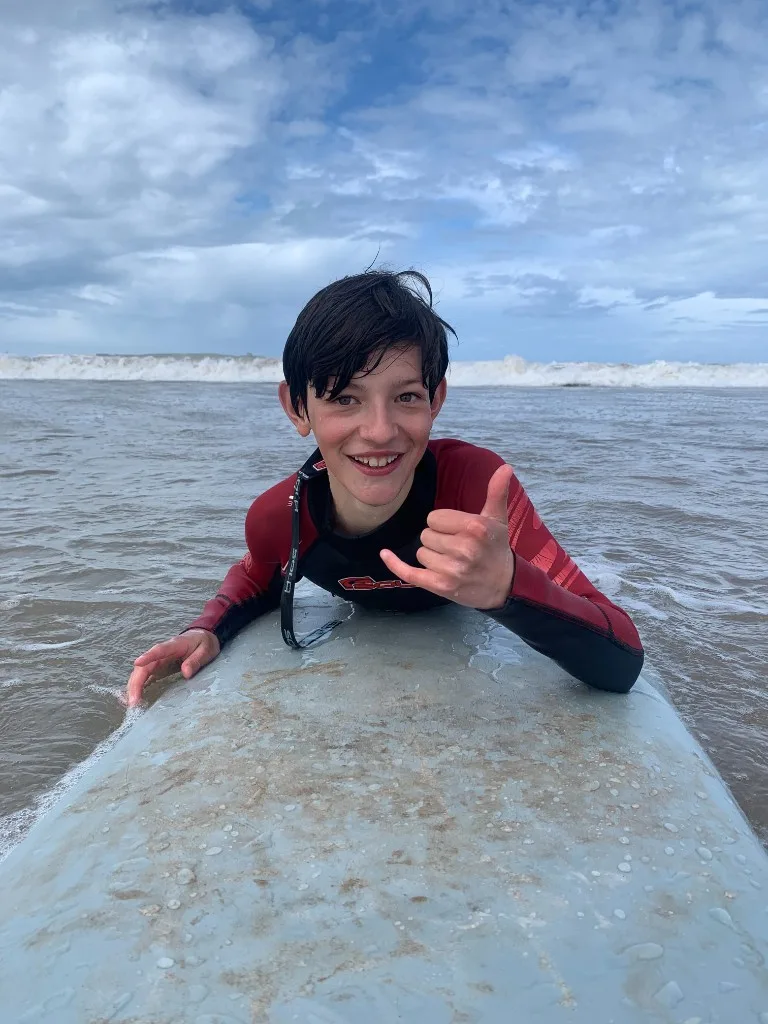
If you stay for a two-week surf camp in Essaouira, the transformation is remarkable. Your pop-up becomes automatic. You start reading wave sets before they arrive. You know which peaks work on which tides, and you can paddle out without an instructor pointing the way.
This is the "intermediate beginner" stage. You're not ripping cutbacks, but you're surfing. You're choosing waves, trimming along the face, and occasionally getting a longer ride that makes everyone on the beach cheer.
Realistic goal after 2–3 weeks: Independent surfing in small to medium conditions, basic wave reading, trimming and speed control.
Month 1 and beyond: the intermediate threshold
Here's the truth most surf schools won't tell you: becoming a true intermediate surfer — someone who can paddle out at any beach break, assess conditions, and catch waves without assistance — typically takes one to three months of consistent practice. Not necessarily consecutive months, but cumulative water time.
If you visit Essaouira for a month-long surf camp, you'll leave as a solid intermediate. You'll have surfed different boards, experienced various swell sizes, and developed the ocean awareness that separates surfers from people who once took lessons.
Factors that speed up or slow down progression
Athletic background: Skaters, snowboarders, and swimmers progress faster. The balance and body awareness transfer directly. Complete non-athletes take longer but often develop better technique because they can't rely on brute strength.
Consistency: Daily lessons beat sporadic sessions. Surfing is motor-skill learning, and daily repetition cements muscle memory. Students who take five consecutive days progress more than those who spread ten lessons over a month.
Fear level: Anxious students hold back, which creates a cycle of falling and more anxiety. Our instructors spend extra time with nervous learners because confidence is the single biggest predictor of progression speed.
The "surfer" milestone
I define a "surfer" as someone who can rent a board at an unfamiliar beach, read the conditions, paddle out safely, catch waves without assistance, and return the board unbroken. Most of our students reach this point after 15 to 25 sessions in Essaouira.
That might sound like a lot, but consider: a two-week surf camp gives you 12 sessions. Add a second trip, and you're there. Surfing isn't a skill you master in a weekend. It's a relationship with the ocean that deepens over years.
Why Essaouira accelerates learning
Some surf destinations actually slow down progression. Heavy localism, dangerous reefs, or inconsistent waves create barriers. Essaouira removes those barriers:
- Sandy bottom eliminates reef anxiety
- Consistent small-to-medium waves provide daily practice
- No aggressive localism — beginners get waves without intimidation
- Long beaches let instructors find uncrowded peaks for every level
- Year-round surf means you can return any season and keep progressing
Final thoughts: enjoy the process
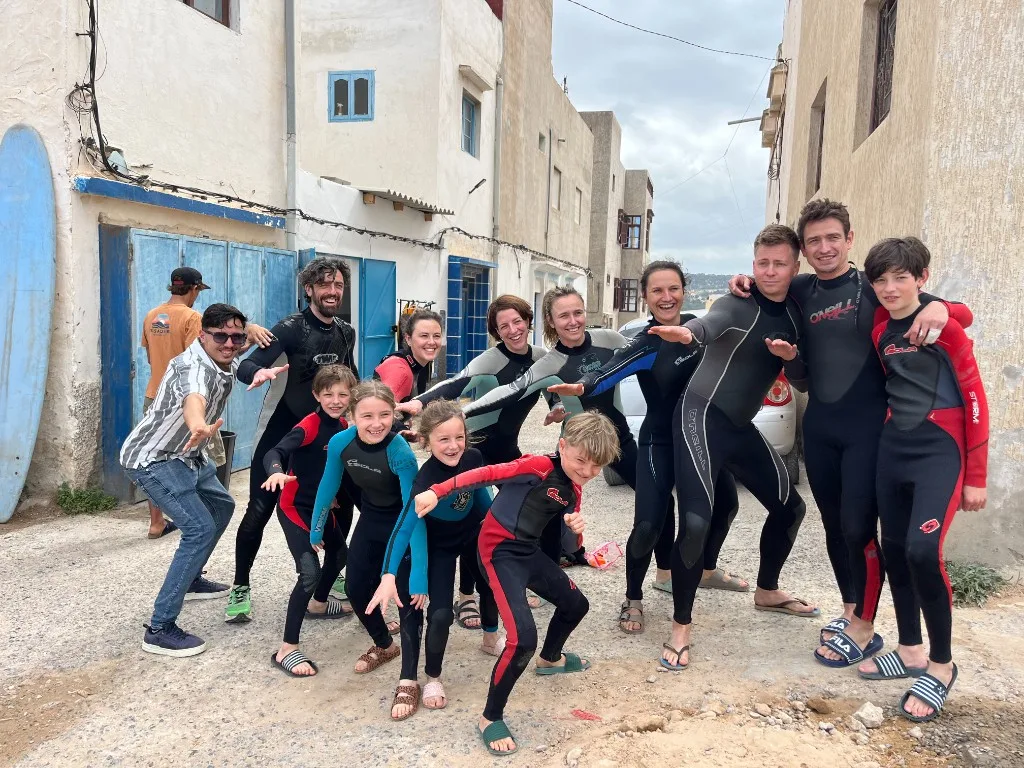
The worst thing you can do is obsess over the timeline. I've seen students frustrated on day two because they can't ride a green wave yet. Then on day four, something clicks, and they're grinning like children. The timeline isn't linear. There are plateaus, breakthroughs, and moments of pure magic that happen unexpectedly.
If you're coming to Essaouira to learn surfing, commit to at least five days. A week is ideal. Two weeks is transformational. And if you fall in love with it — which you probably will — plan your return before you even leave.
FAQ
Can I stand up on my first surf lesson in Essaouira?
How long until I can ride green waves?
How many sessions to surf independently?
Why is Essaouira good for learning quickly?
How many days should I book for a surf holiday?
Keep reading
Related guides from our surf tips and Morocco travel guides